Mosquito pressure in Franklin County peaks sharply between May and October, driven by humid river valleys, dense shade canopies, and persistent rainfall. Properties bordering riparian corridors like the Scioto River…
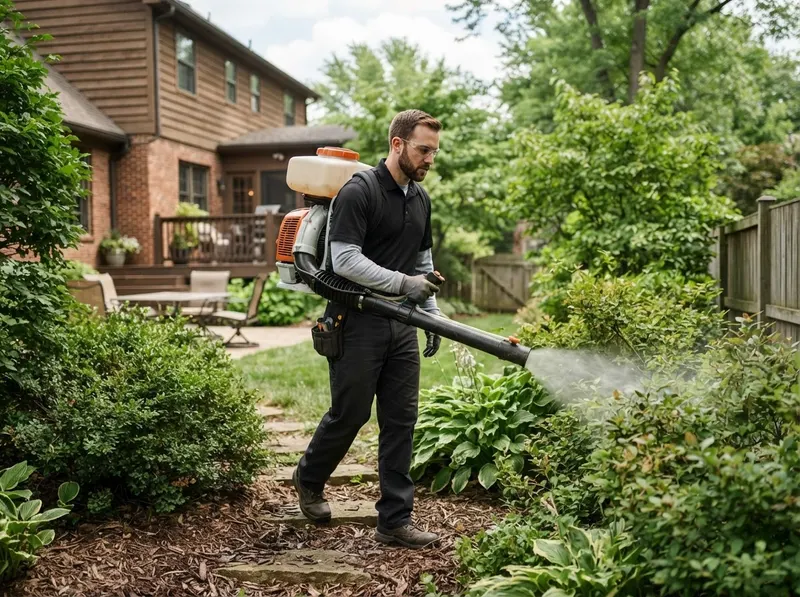
Mosquito pressure in Franklin County peaks sharply between May and October, driven by humid river valleys, dense shade canopies, and persistent rainfall. Properties bordering riparian corridors like the Scioto River near the Scioto Mile Promenade or ravines in Clintonville experience heavy emergence of floodwater and container-breeding species. Left unmanaged, stagnant water collected in clogged gutters, catch basins, and low lawn depressions allows female mosquitoes to produce rafts of 100 to 300 eggs every few days, as documented by the Centers for Disease Control and Prevention mosquito management guidelines. Retail foggers and electronic repellers offer temporary dispersion lasting only a few hours. In contrast, StoneLark Insect Control deploys micro-encapsulated formulations bonded directly to daytime resting sites under the guidance of the EPA pesticide regulation framework, delivering persistent residual suppression across 21 to 30 days without broadcast carpet-bombing of open lawn.
Dense, historic urban landscapes in German Village, Victorian Village, and Olde Towne East present specific structural challenges. Enclosed brick courtyards, narrow shaded alleys, and ivy-covered stone walls retain excessive moisture, creating protected harborage zones that shelter adults from wind and direct sun. Technicians target the undersides of leaves on perennial shrubs, ornamental ground cover, and lower tree branches up to 10 feet high using calibrated low-pressure misters. For localized water retention, such as ornamental birdbaths, French drains, and garden catch basins near Franklin Park Conservatory and Botanical Gardens, treatments utilize Bacillus thuringiensis israelensis (Bti) granules, a selective biological control standard supported by the World Health Organization vector control standards that disrupts mosquito larvae without affecting domestic pets, plants, or beneficial soil organisms.
Surrounding suburban properties in Bexley, Upper Arlington, Grandview Heights, and Worthington frequently contend with mature shade trees and expansive irrigation systems. The trade-off between single-event treatments and seasonal treatment plans centers on breeding cycles: a single knockdown provides immediate clearance for 2 to 3 weeks for outdoor gatherings, but sustaining seasonal relief requires re-application every 21 to 28 days to intercept successive generations. Technicians identify drainage faults and container breeding risks mapped against vector surveillance data from the Ohio Department of Health arbovirus tracking system and protocols from the Franklin County Public Health mosquito program. Treatment materials cure within 30 to 45 minutes of application, after which children and household pets can safely re-enter the lawn, aligning with consumer education from the National Pest Management Association guidance and worker protection measures overseen by the Occupational Safety and Health Administration. Service requires no long-term contractual lock-in; homeowners can request stand-alone treatments or regular recurring maintenance.
Every job gets a firm, written price after a free on-site visit.
Tell us about your mosquito reduction job in Columbus and we'll send a clear, written quote, usually the same day.
 StoneLark Insect Control